Not Every Door Needs a Welcome Mat: The Case for Gatekeeping
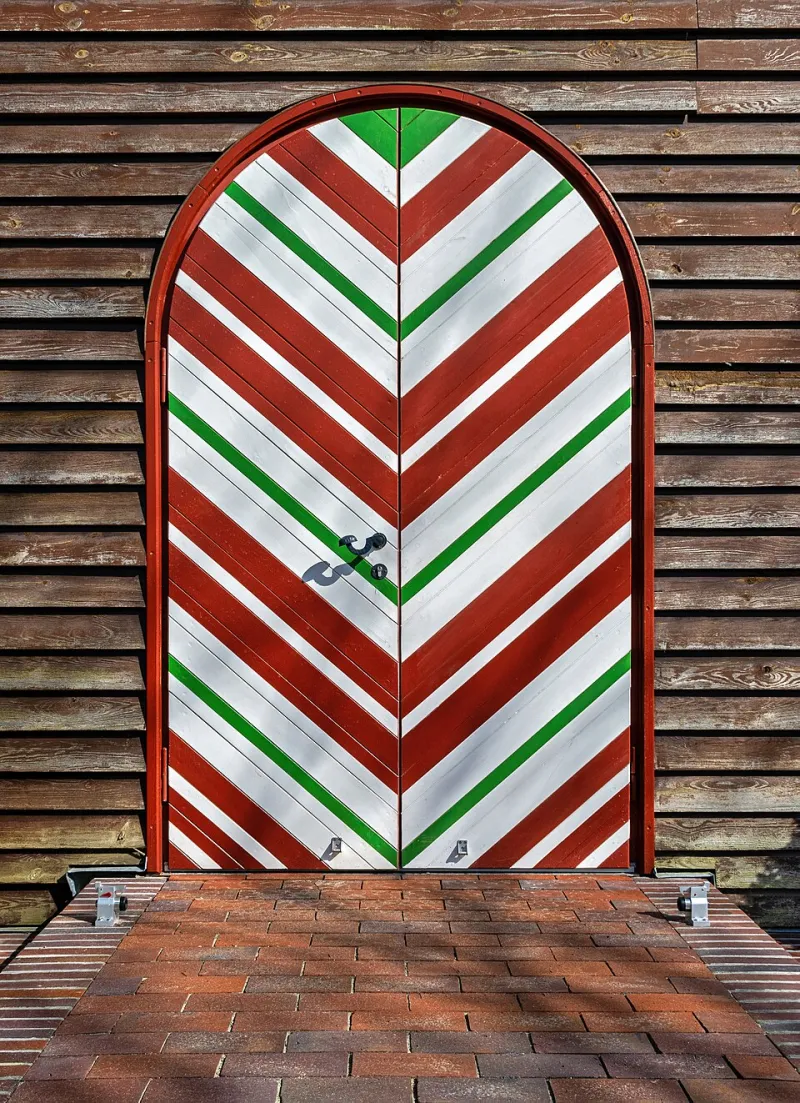
Photo: Radomianin, CC BY-SA 4.0, via Wikimedia Commons
There is a reflex online that has become so common it barely registers: you encounter a closed community, and you demand entry. What does this mean? Why won't they explain? What are they hiding? The assumption underneath is that all culture should be legible, that every slang term deserves a glossary, that every private Discord is a public resource waiting to be unlocked. It is curiosity dressed up as entitlement, and it is making the internet worse.
Let me be clear about what I am not defending. Gatekeeping based on race, gender, sexuality, disability, or class is not curation. It is exclusion, and it deserves every bit of criticism it gets. But there is another kind of gatekeeping that has nothing to do with who you are and everything to do with how you show up. That kind — the kind built on trust, participation, and patience — is not a bug. It is a feature.
Curiosity Is Not a Skeleton Key
Asking questions is fine. Demanding answers is not. There is a difference between I would love to understand this and you owe me an explanation. The first builds bridges. The second turns a community into a zoo exhibit. When someone screenshots a private conversation and posts it with the caption "explaining this niche fandom so everyone can follow," they are not doing journalism. They are strip-mining context for clout. The explainer gets the likes. The community gets the flood.
This happens in film fandoms constantly. A private Discord spends years building a coded vocabulary, a set of inside jokes, a way of talking about a director's work that feels like a second language. Then a viral thread “decodes” it. Within a week, the server is full of people who read the explainer and think they are owed the same intimacy. They are not. They have read the menu. They have not eaten the meal.
The Cost of Making Everything Legible
Legibility is not free. When a niche community gets discovered, it gets flattened. Content farms strip the context. Scalpers buy the tickets. Tourists show up for the aesthetic and leave the culture behind. An invite-only event gets posted to TikTok, and the next year it is a $400 party with a dress code and a corporate sponsor. The people who built it cannot afford to go anymore.
This is not hypothetical. It is the standard life cycle of cool things on the internet. The mistake is thinking that the solution is more explanation. It is not. The solution is boundaries. A lock is not a judgment. A lock is a boundary. A private forum with an application process is not a conspiracy. It is a room with a door.
Gatekeeping Is Not Always Exclusion
There is a version of gatekeeping that protects. Coded slang can keep a community safe from harassment. Invite-only events can keep a space safe for people who need privacy. A private forum with moderation can be the only place where a conversation does not turn into a fight. These are not arbitrary hoops. They are infrastructure.
The test is simple: is the gate keeping people out because of who they are, or is it keeping the space intact because of how it works? A community that requires you to lurk before you post is not elitist. It is asking you to listen. A community that requires you to contribute before you get access is not hazing. It is asking you to show up. The difference matters.
What Earned Access Actually Looks Like
Earned access is not glamorous. It is showing up, shutting up, and paying attention. It is learning the slang by context instead of demanding a glossary. It is reading the room before you post the link. It is respecting the fact that some conversations are not for you, even if you can see them.
The door opens from the inside. That is the whole idea. If you want in, you build trust. You do not bang on the glass. And if the door never opens, that is allowed too. Not every room is yours. Build your own.
The Right to Be Unclear
The internet is better when everything is explained. That is the mantra. But it is not true. The internet is better when people have the right to be unclear, to be small, to be private, to have a conversation that does not need a public transcript. Some cultural knowledge should stay earned. Some communities should stay closed. Some doors should stay shut.
That is not a failure of openness. It is a form of respect. The next time you find a locked door, try not to treat it as a puzzle. Try treating it as a boundary. You do not have to be in every room. You just have to be okay with that.