Unlisted Does Not Mean Unloved: The Secret Playlist Circuit Reshaping Film Fandom
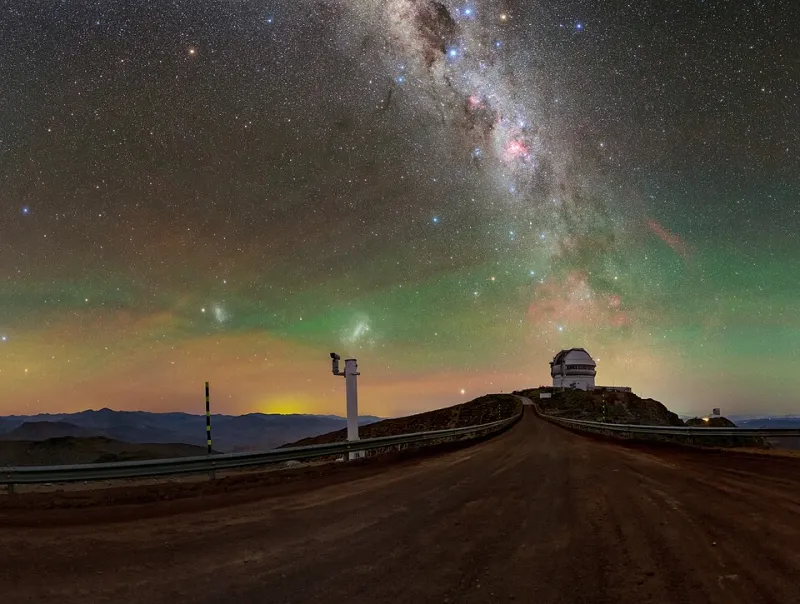
Photo: International Gemini Observatory/NOIRLab/NSF/AURA/T. Slovinský, CC BY 4.0, via Wikimedia Commons
Ask a certain kind of film person where they watch movies and they will not say a streaming service. They will say a name, or they will send you a link, and the link will open a video with forty-one views, a title that's just a year and a word, and a description that says nothing at all.
This is the shadow cinephile circuit: an informal network of unlisted YouTube uploads, hand-sequenced playlists, and invite-only watchlists that never surface in search results. It is not exactly illegal and not exactly legitimate. It is the place where film fandom actually lives in 2026, and almost nobody outside it knows it exists.
The Architecture of Invisible Things
YouTube has three visibility settings, and the middle one is the whole story. Public means searchable, recommended, indexed, and — sooner or later — claimed. Private means locked to invited accounts, which makes sharing a hassle and leaves a trail. Unlisted means the video is playable by anyone holding the link, doesn't show up in search, doesn't appear on the channel's page, and doesn't get surfaced to strangers.
The link is the key. Not a password, not an invite, just a URL — trivially copyable, easy to paste into a Discord, easy to bury in a comment under an unrelated video. Unlisted is the only setting on the platform that behaves like a whisper.
Playlists inherit the same logic. An unlisted playlist can contain thousands of videos, sequenced in a deliberate order, invisible to search, and shared as a single link. For film fans, that's not a feature. That's a medium.
Why Unlisted Beat Private
Because the point was never secrecy. The point was plausible deniability plus frictionless access.
A private video says this is mine. An unlisted video says this is ours, and we're not putting a sign on the door. The difference is everything for a community that runs on informal preservation — restorations, alternate cuts, television broadcasts with the original commercials intact, trailer reels, deleted scenes, 35mm scans, obscure regional releases that never made it to any disc.
Much of it sits in a legal gray zone. Some of it is outright infringement. Some of it is the only surviving copy of something a studio has spent decades forgetting it owns. The people uploading it are not running a business. They are running an archive, badly funded and constantly interrupted.
The Keepers
Every corner of this circuit has its custodians — the accounts that post nothing publicly for months and then quietly drop a link. They tend to share a house style. Minimal metadata. No thumbnails worth clicking. Titles that read like file names. If you found it, you were meant to find it, and if you didn't, that's fine too.
They get taken down. They come back. A strike wipes a channel and the archive migrates to a Drive folder, a Vimeo mirror, a second channel with one more underscore in the name. The community learns to keep its own copies, which is the entire point of preservation and also the reason none of this is stable.
The keepers are not treated as heroes, exactly. They're treated as infrastructure — the way you treat a good library. You don't thank the building. You just notice when it's gone.
Playlists as Letters
Here's where it gets genuinely interesting as a form.
An unlisted playlist is a sequence. Order is an argument. Someone assembles thirty films in a specific arrangement and names the whole thing after a line of dialogue nobody outside the group would recognize, and that title is doing an enormous amount of work. It's a greeting, a filter, and a test.
Cult compilations get built this way. So do themed programs — a run of films about a single city, a chronological survey of a movement, a set of pictures that share a cinematographer, a marathon built around one actor's strangest decade. None of it is discoverable. All of it is deliberate.
And then there's the ephemeral stuff. Playlists that exist for a weekend, timed to a conversation in a group chat, deleted once everyone has seen them. Nothing about that is efficient. It's the opposite of efficient. It's a person curating for eight people who will actually appreciate it, which is a kind of attention that the recommendation algorithm has never once been able to replicate.
“You Had to Be There” as Credential
Film fandom has always had a hierarchy problem: everybody can watch everything now, so how do you establish that you've really seen things?
The unlisted circuit solved it accidentally. Its currency isn't access to blockbusters — those are everywhere. Its currency is access to the specific, the fragile, and the temporary. The version that only existed for six weeks. The upload that got pulled. The playlist someone built in 2023 and never rebuilt.
So the phrase you had to be there has become the highest compliment in the scene, and the most annoying one to hear from the outside. It's not gatekeeping about money or connections. It's gatekeeping about timing, which is the one thing nobody can buy later.
The Custodian's Dilemma
The circuit has an obvious structural problem: visibility kills it. A link that gets posted in a big enough forum draws a crowd, and a crowd draws rights holders, and a rights holder draws a takedown. Success is self-terminating.
So the culture has developed antibodies. Links get passed in DMs rather than comments. Playlists get renamed. Some creators deliberately keep view counts low by re-uploading to fresh URLs, which is a bizarre sentence to write but describes a real practice. Others split the archive into fragments so no single takedown can take the whole thing down.
The result is a strange kind of preservation: redundant, decentralized, paranoid, and more durable than you'd expect. Film history has been saved more than once by people with no institutional backing and a stubborn refusal to let a file disappear.
The Link Will Die, That's the Point
There's a melancholy built into all of this. You will click a link in a three-year-old comment thread and get the gray screen: this video is unavailable. The playlist is empty. The channel is gone. Whatever was there is now a hole with a URL attached.
And yet the circuit keeps going, because the alternative is waiting for a corporation to decide your favorite film is worth remastering. The people in this scene have made a collective bet that a broken link is better than no link at all, and so far they've been right.
So if someone ever sends you an unlisted playlist with a title like november, again and a running time of nine hours, don't ask what it is. Open it. Somebody decided you were worth the key.