REDACTED: The Visual Language of Secrecy That's Taken Over the Internet
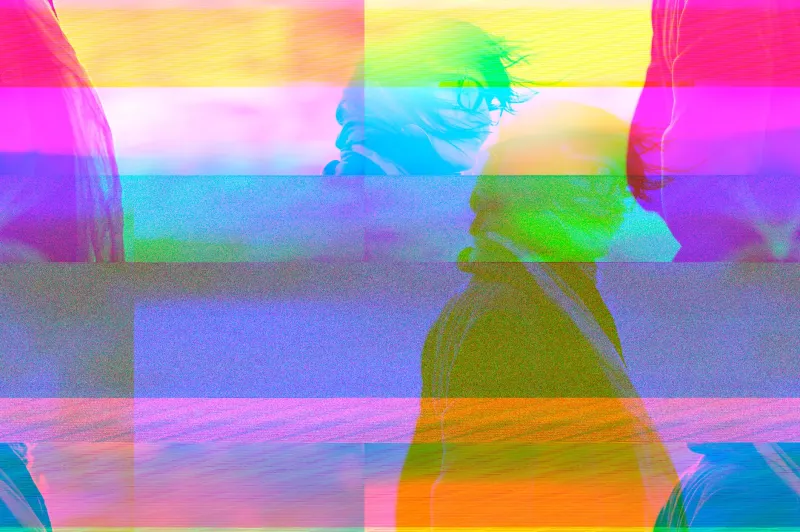
Open TikTok. Scroll for ninety seconds. You will almost certainly encounter it: text that flickers like a dying monitor, a thumbnail stamped with a red CLASSIFIED diagonal, a username rendered in a font that looks like it was recovered from a corrupted hard drive. Maybe a video where the creator deliberately obscures part of the frame, or overlays their footage with the visual noise of a VHS tape that's been played too many times.
This is not an accident of individual taste. This is a coherent aesthetic movement, and it has been building for years.
What We Talk About When We Talk About the Classified Look
The visual vocabulary here is specific enough to catalog. Redaction bars — thick black rectangles censoring words or faces. Glitch effects that suggest digital corruption or signal interference. Monospaced typefaces that evoke government terminals and early internet interfaces. Stamps and watermarks: CONFIDENTIAL, FOR YOUR EYES ONLY, ACCESS DENIED, [DATA EXPUNGED]. Color palettes that skew toward desaturated greens, amber, and the particular shade of white that old paper turns.
Taken individually, any one of these elements might read as a stylistic quirk. Together, they form something closer to a visual dialect — a set of codes that signal, immediately and legibly, that the person using them is operating in a specific cultural register. They're saying: I know something you don't. Or I know what it feels like to want to.
Tracing the Signal Back to Its Source
This aesthetic didn't emerge fully formed from a TikTok algorithm. Its roots go back at least to the early internet horror communities of the 2000s and early 2010s — specifically, the SCP Foundation.
For the uninitiated: the SCP Foundation is a collaborative fiction wiki that presents itself as the internal documentation of a secret organization that contains anomalous objects and entities. The writing format is deliberately clinical and bureaucratic. Entries are numbered. Information is withheld. Key details are marked [REDACTED] or [DATA EXPUNGED]. The horror doesn't come from what's described — it comes from what isn't.
The SCP Foundation understood something that mainstream horror had forgotten: withholding information is more unsettling than revealing it. And the visual language of institutional secrecy — the stamps, the file numbers, the redactions — made the fiction feel real in a way that conventional storytelling couldn't.
Creepypasta culture more broadly ran on the same logic. The best entries weren't presented as stories. They were presented as forum posts, recovered files, archived emails. The aesthetic of authenticity — the look of something that wasn't supposed to be seen — was the horror.
From Creepypasta to Canva Templates
What's remarkable is how completely this aesthetic migrated from horror subculture into general youth creative culture. The redacted document look now shows up in:
- Indie game UI design, where menus deliberately evoke corrupted operating systems
- Music video aesthetics for artists working in hyperpop, dark pop, and post-internet R&B
- TikTok video editing, where creators use glitch overlays and VHS noise as a default texture
- Discord server branding and profile customization
- Zine and print design among young artists who've never touched a photocopier
The journey from SCP wiki to mainstream Gen Z aesthetic is not a straight line — it runs through ARG culture, through indie horror games like Doki Doki Literature Club and Inscryption (both of which use the aesthetics of corrupted files as narrative devices), through vaporwave and liminal space photography, through the general internet fascination with the concept of "things not meant to be found."
The Oversharing Paradox
Here's the cultural tension that makes this aesthetic so legible right now: Gen Z is the most documented generation in human history. They grew up on platforms engineered to extract and display personal information. Instagram demanded curated authenticity. BeReal demanded unfiltered reality. The entire architecture of social media has been built around the premise that visibility equals value.
The classified aesthetic is a direct rejection of that premise.
When you redact your own content — when you glitch your face, when you stamp your post with ACCESS DENIED, when you make your username look like a file name — you are performing the opposite of oversharing. You are signaling that there is something beneath the surface that the algorithm doesn't get to index. You are constructing a self that has classified sections.
This is not just aesthetic preference. It's a psychological response to surveillance culture, and it's a smart one. In a media environment that has commodified transparency, opacity is the punk move.
"I started using the redacted style because I wanted my content to feel like it had a layer," said one 21-year-old digital artist from Chicago who creates under a pseudonym and declined to share their real name. "Everything online feels so flat. Like everyone's just handing everything over immediately. I wanted people to feel like they were finding something, not being fed something."
Exclusivity as a Design Value
There's a secondary function to this visual language that's worth naming: it creates in-group legibility. If you recognize the SCP formatting conventions, you're in on something. If you understand why a glitched username reads as an aesthetic choice rather than a technical error, you're operating at a certain cultural literacy level. The look itself is a filter.
This is how subcultures have always worked — you encode your identity in symbols that your people will recognize and outsiders will misread. What's new is the speed at which these codes travel and the scale at which they operate. The classified aesthetic moved from niche horror wikis to mainstream TikTok in roughly a decade, which in internet time is basically geological.
The risk, of course, is that once an aesthetic goes mainstream, it loses the exclusivity that made it mean something. When every brand is using glitch effects in their ad campaigns — and they are — the signal gets corrupted in a different way.
The Vault Always Has Another Door
What makes this aesthetic durable, though, is that it's not really about the visual elements. It's about the underlying desire those elements express: the desire for mystery, for depth, for the sense that there is more to know than what's been given to you.
That desire doesn't go away when the aesthetic gets commodified. It just finds a new cipher. The kids who built SCP lore in 2008 weren't doing it because redacted text was trending. They were doing it because they needed a place where the world felt bigger and stranger than it looked.
Gen Z is doing the same thing, with better software and a wider distribution network. The classified stamp is just the current handshake. The vault goes deeper than the door.