No Signal, No Problem: How Discord Became the Basement Hangout Gen Z Never Had
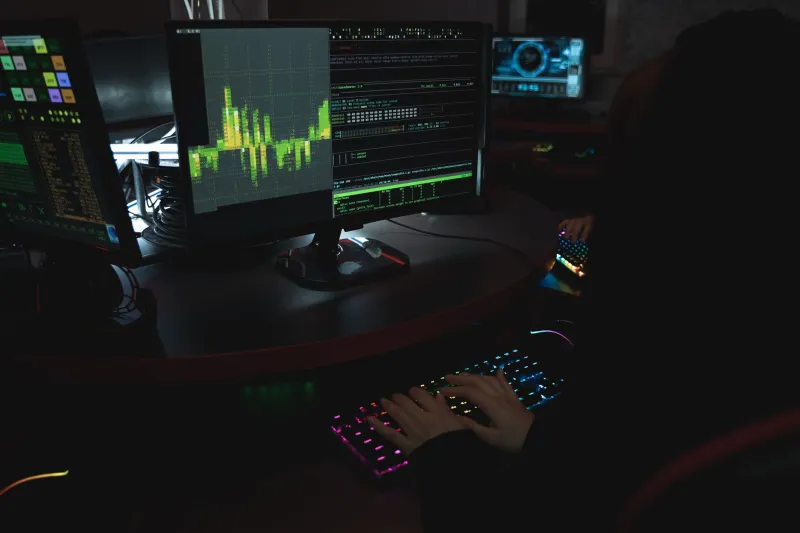
There's a server for everything. Competitive Pokémon trading. Midwest emo revival heads. People who only listen to music recorded in abandoned buildings. If you can name the obsession, someone has already built a 200-person community around it, complete with custom emoji, a bot that plays lo-fi beats in the voice channel, and an unspoken social contract that took about three weeks to develop organically.
For a lot of American teenagers, that server — not a coffee shop, not a school hallway, not a church youth group — is where they actually feel at home.
The Death of the Third Place (And What Filled the Hole)
Urban sociologist Ray Oldenburg coined the term "third place" back in 1989 to describe the informal gathering spots that exist outside of home and work — the diner, the barbershop, the local record store. These spaces were never really about the coffee or the haircut. They were about low-stakes human contact, the kind where you could show up, be recognized, and leave without it being a whole thing.
For Gen Z, those spaces have been quietly disappearing. Suburban sprawl, the death of the mall, rising costs, and two-plus years of pandemic isolation didn't just reduce opportunities for casual hangouts — they restructured the entire social architecture that teenagers once navigated by default. When you can't drive yet and the nearest movie theater is forty minutes away, the question of where to go becomes genuinely complicated.
Discord didn't set out to solve that problem. It launched in 2015 as a voice chat tool for gamers who were tired of laggy third-party software. But the platform's structure — persistent text channels, voice rooms, customizable roles, and the ability to build layered communities around any topic imaginable — accidentally created something closer to a neighborhood than a chat app.
"It's the only place where I don't have to explain myself before I can talk to someone," said Marcus, a 17-year-old from rural Ohio who moderates a server dedicated to underground hip-hop. "Everyone there already gets the baseline. We skip like three layers of small talk."
The Cipher of In-Group Language
What makes Discord communities feel distinct from, say, a Facebook group or a subreddit isn't just the format — it's the language. Every active server develops its own dialect over time. Inside jokes calcify into pinned messages. Nicknames replace real names. A specific reaction emoji becomes the approved way to express irony. New members who don't know the codes stick out immediately, and learning them is a form of initiation that nobody explicitly administers.
This coded intimacy is doing real psychological work. Researchers who study adolescent identity formation have long noted that teenagers use group-specific language as a way to signal belonging and test social boundaries. In a Discord server, that process is compressed and accelerated. You can go from lurker to trusted regular in a matter of weeks if you read the room correctly and contribute something genuine.
Jada, a 19-year-old college freshman from Atlanta who has been active in several indie game development servers since she was 14, describes it as learning a second language. "You absorb it without realizing. Then one day someone new joins and you catch yourself explaining things to them the same way someone explained them to you. That's when you know you're actually in."
The Mental Health Ledger
The benefits are real and documented. Studies on online community participation consistently show that niche interest-based groups provide meaningful social support, particularly for teenagers who feel marginalized in their physical environments — LGBTQ+ youth in conservative towns, neurodivergent kids who struggle with traditional social norms, kids with hyperspecific interests that nobody around them shares.
Moderators — often unpaid volunteers who are themselves teenagers or young adults — frequently become de facto mental health first responders. "I've talked people through panic attacks in DMs," said Priya, a 22-year-old who moderates a server for fans of a specific indie music genre. "That's not what I signed up for, but it's what the role became. These kids have nowhere else to go at 2 a.m."
That's both the strength and the risk. The same insularity that makes a Discord server feel safe can also deepen isolation rather than address it. When your entire social world exists within a community of 300 people who all share the same aesthetic and the same references, the feedback loop can get tight. Dissenting opinions get filtered out. Groupthink sets in. And because the server is always there — always open, always lit up with notifications — the incentive to seek connection outside of it diminishes.
"I went almost a full semester without making a single friend at my actual school," admitted Marcus. "The server felt more real than the hallways did. I'm not sure that was healthy."
Belonging Versus Hiding
The line between finding your people and retreating from the world isn't always obvious from the inside. Community moderators who've been doing this long enough say they can usually tell the difference between a user who's using the server as a bridge — a place to develop social confidence they'll eventually take offline — and one who's using it as a bunker.
The bunker users tend to be the most active, the most invested in server drama, and the most resistant to any suggestion that their online relationships might have limits. The irony is that their hyperengagement often makes them valuable community members right up until it doesn't.
Platforms like Discord have rolled out features in recent years — mental health resources in server directories, crisis intervention prompts — but the responsibility largely falls on moderators who are themselves unpaid, often undertrained, and sometimes just as isolated as the users they're looking out for.
The Vault Is Real
What Discord communities have figured out — whether intentionally or not — is that belonging doesn't require proximity. It requires recognition. It requires someone to see the specific weird thing you care about and respond to it with something other than confusion or dismissal.
For a generation that grew up being told to "just put yourself out there," the idea that "out there" might be a voice channel with seven people talking about drum machine samples at midnight is still somehow controversial. It probably shouldn't be.
The third place was never really about the place. It was about the feeling of being somewhere you were already expected, already known, already part of the story. A lot of kids are finding that in a server. The question worth asking isn't whether that counts — it clearly does — but whether we're building a world where that's the only option they have.